He was sitting on the floor, hanging onto my leg, deep fear palpable on his face reflecting the anxiety-ridden content of a note that I was now holding in one hand. My other hand was holding the beachouse phone, the only outside line at our location at this little backpack hostel owned by a friend of mine. I’d brought my students to Fiji, about 18 of them including another instructor who wanted to come along. My husband and oldest daughter among them. I’d been encouraged to design an international study tour to a place I’d lived and worked in, to bring these students from an urban community college in a rustbelt town to the tropical paradise in the middle of the South Pacific.
It was supposed to be a beautiful learning experience, but one also fraught with stress because I had other reasons for coming back. I still had a home here, friends, adopted family. And my immediate family ached to see them again after following the news of political unrest from the previous year. The evidence of that unrest was still apparent in the ruins and graffiti that covered an old lighthouse-turned-restaurant on the coast, outside the capital city.
Workshops had been arranged, visits to cultural sites scheduled, and a student interchange between my Flint students and the university journalism students in Fiji who’d been trying to do their work diligently throughout the turmoil of the previous year.
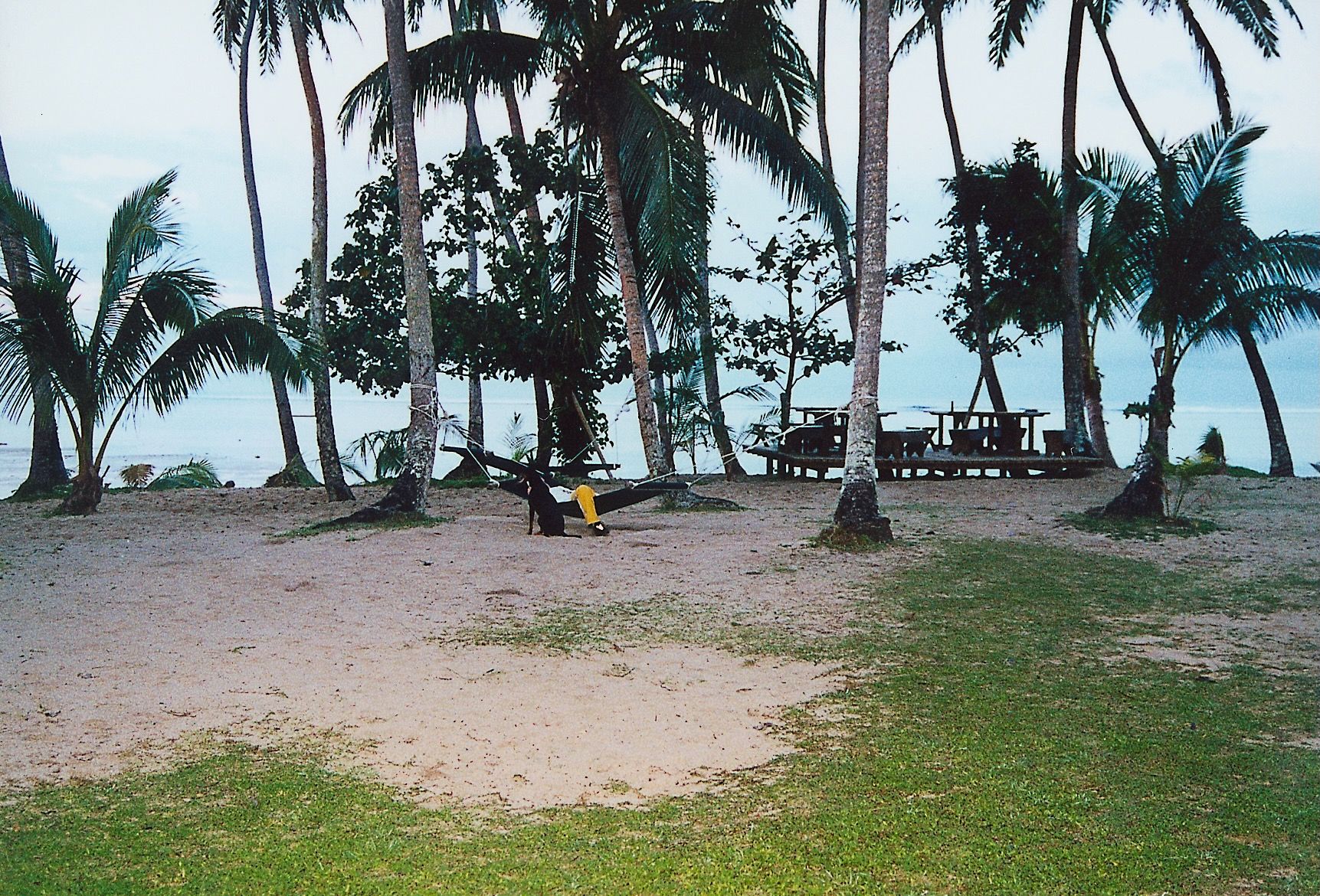
The group arrives at dawn. • Photo by author
Even an art exhibition was scheduled where my students would share their own conceptual self-portraits on the walls of the national museum, while also learning that week about the work of indigenous artists in the region.
But none of that mattered at the moment. It was only day 1 of the trip and Allan clung to my leg on the floor, fully engulfed in a nervous breakdown that would eventually break me down. The voice on the other end, his mother, sounded in my ear – “Life would be so much easier if I only had one son,” she said. Shocked by her words, I later would learn she was at that moment suffering the shattering of her own mental health.
My next moves were swift. I’d had the forethought to have students sign temporary healthcare POAs since the college I worked for was not yet prepared for overseas study tours at the time. And so I reached out to my old doctor on the island, explaining the situation. He quickly arranged for us to meet with the only psychiatrist in the country at his office near Suva, the capitol, over an hour and a half away. I called my friend, the owner of the beachouse, who’d been renting my home. And he quickly arranged for my dear student’s belongings to be moved to his own private room with a caregiver, a kind Fijian man who served as the gardener most days.
The rest of the trip moved ahead fairly well. His classmates rallied around Allan, including him when he seemed up to participating. And supporting him even after our return to the states. Two other students, Jimmy and Will, became very protective. Jimmy especially would check into the classroom on the days he knew Allan was supposed to be there to make sure he was doing okay.
But about six weeks after our return to Michigan, 9/11 occurred. My dear student had no support outside of school and so looked devastated when I had to tell him that the college was closing and he had to go home.
In the ensuing weeks, as we all struggled to regain some kind of equilibrium from this post-9/11 new world order, we missed the signs. One Friday, Jimmy came into my office to tell me he hadn’t seen Allan in class the day before. And just as Jimmy went back to work in the lab outside my office, my phone rang. It was Allan’s old girlfriend.
Her voice crumbled through the phone lines. “He’s shot himself,” I heard her say, just before I screamed myself – “SHIIIITTTTTT!!!!!” The rest of the details laid bare that he had fallen deeply into his psychosis in the weeks after 9/11 while struggling to complete his school work that included a post-travel piece of art.
His classmates came together again to mourn his loss, struggling to understand the depth of his pain. Later, I would be given his artwork, portfolios, and black books – sketchbooks where he’d plan out his graffiti art. It was among these pieces, I discovered where he was going with his final piece. And in a dream, I saw it completed and I made it so.
It took nearly a year to put together the final follow-up exhibition. Students struggled to redefine who they were post travel. But who were we after a trip to the other side of the world, meeting others who’d faced unrest in their own backyard? Some had come back thinking that maybe their own lives weren’t as bad by comparison, coming from the rough streets of this former bustling automotive factory town. But 9/11 turned everyone’s world upside down, seeing the attacks on our own country. And even the geographic distance from that horror shrunk further when weeks later, the students learned that their friend had given up on life and ended his.
One student came to me and said, “l’ll need to redo my post-trip self portrait. It’s too balanced, too static,” they said. Life had had too many twists and turns and they needed to reflect that balance as if on the edge of falling.
Beachside meditations • Photo by author
Looking back on this group of inveterate travelers from a quarter century ago, this old woman feels something not so much as grief, but awe. The healing gift of time has shown me that Allan’s nervous breakdown and death maybe weren’t bookends that defined a tragic legacy.
No. With a longer view, I can see it wasn’t a legacy with a tragic ending, after all. Instead, it was the launching of incredible maturing and growth by so many of his fellow students, now adults with established careers and grown children of their own. Longterm friendships were built, regardless of distance, connections that would endure through darkness and light. And most importantly, there was profound resilience.
Because life is a journey filled with triumphs and tragedies. And the only way to keep upright through it all at the edge of balance is to keep moving forward, knowing that – though we might not always see them – we are not traveling alone.
The above prose was expanded from a 13-minute writing exercise during a six-week workshop offered by @LauraLentzWriter and her Literati Academy. The writers participating in this series are exploring their way through grief and the hero’s journey.
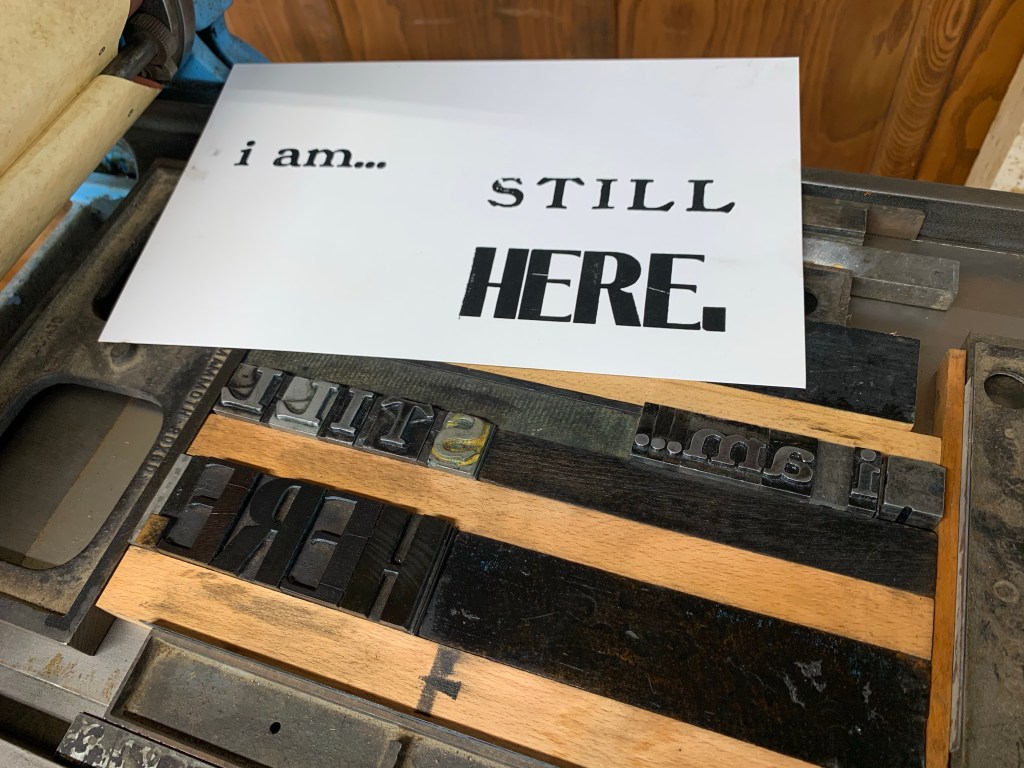
A first proof of a project on the Poco No. 0 press rescued from the trash.
I can get lost in the type. Surrounded by cases and cases of letterpress type, metal, wood, very large to very small. It feels comforting to be around, like visiting long lost friends. And I get to spend some time nearly every day just hanging out with my type friends getting to know them better.
It feels comforting to be around, like visiting long lost friends.
My thoughts wander as I look at the individual letters that once made up a story. It’s like they’re destined to be reborn, found again to make a new story. But for now, the pile of type is pied, jumbled. And I wonder about that word – pied. Did that mean that the Pied Piper of Hamelin was “jumbled” too? Turns out “no,” not exactly.
In the story, however, the Pied Piper wore a very colorful costume and pied was referring to the multiple colors. But I like the idea that perhaps he was a bit “colorful” in his thinking, too. As in the stories lost in the pile of pied, aka jumbled, type. And here I was, playing the role of the Printer’s Devil, sorting through the pile of tiny pieces of type, first by size, and then by typefaces, with some of the metal type tossed into the hell box for melting if too rough a condition to use. Once the second round of sorting is done, then finding a home for the more complete sets of type will be necessary. And that job usually comes with having to clean and probably restore the warped bottom of one of the last cases still available to fill.
Could they have been the whispered prayers of a grieving soul? Might the words they make be the silent voice of strength in the face of adversity?
What some may see as tedium, I find meditative. As each tiny letter appears before me, I admire the details, the design decisions made in their creation, the changes from one letter to the next in different typefaces, even among the same size. This afternoon it was 6 point to 18 point type. The majority was at the smallest size and fascinated me with the differing heights and widths of the capital letters from different typefaces even as they measured the same physical size.
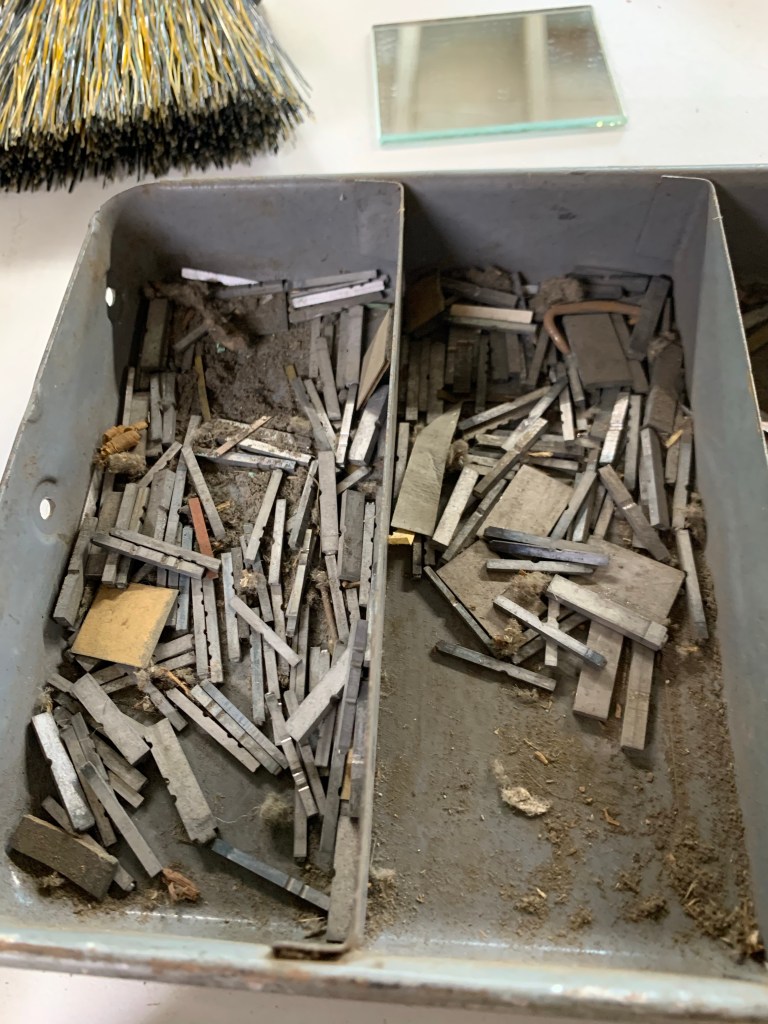
I wondered… what could have been written with these tiny letters? Was it the fine print of a contract? Could they have been the whispered prayers of a grieving soul? Might the words they make be the silent voice of strength in the face of adversity? These thoughts wander through my mind like wisps of smoke as I pick up small handfuls of the pied type, blowing off the dusty fragments of nesting material from mice who’d made their way into the typecases in an abandoned printshop long before the cases made their way here, to my little corner of letterpress heaven.
A small batch of pied type ready to be sorted. Previously, I had sorted through bags of new type that had fallen from their original boxes.
The letterpress studio has been a longtime coming. I think about how it has been a whirlwind of activity ever since early May when my younger daughter told me she was thinking about selling her Charles Brand etching press, the one that I bought her the Spring after her dad passed away. The seller was an old professor of hers in Ann Arbor and we’d settled on a price. But then a few days later he came back asking for more, apparently having gotten a higher offer. It was a poor business practice but I wanted her to have the press that would allow her to do what she’d been thriving with in college, and in her work for mentor Endi Paskovic, with woodcut printing.
The letterpress studio has been a longtime coming. I think about how it has been a whirlwind of activity ever since early May when my younger daughter told me she was thinking about selling her Charles Brand etching press, the one that I bought her the Spring after her dad passed away.
When we finally settled on a price and went to pick it up, with Steve’s help and that of several of my daughter’s friends, I stood with the seller and was chatting about printing and letterpress since we had printed my older daughter’s wedding invitations on our own little Kelsey 6×10. He pointed out the pieces to a printing press scattered across his garage floor, a very large 12×18 Chandler & Price platen press that he had brought from California long ago and now was doing a full restoration after his divorce. Do you want it? he asked. For free… since you were buying the other press, he said.
The 2500 lb. press made its way home, with lots of help and an extra trip to Ann Arbor since the combined weight with the Charles Brand would have been too much for the box trailer we were using. That was nearly 8 years ago. The C&P is still here… and so is my now husband, Steve who is more determined then ever to finish assembling the press, especially now that it has an honored place in the newly reorganized studio. Once the Charles Brand was set to sell, and my daughter’s flat files removed from precious floor space in the studio, things changed quickly.
A Vandercook #4 proofing press was in an estate sale south of us, an unusual opportunity that I couldn’t pass up. But a weekend before the sale started I called the estate sale manager to ask questions. After a little back and forth, he asked me to come down to look over the printing stuff to give him some advice since his own knowledge of it was far more limited than even my own.
We drove down in the pouring rain in the Tesla on Monday, driving dirt roads when I’d mistakenly thought it would be safer to stay off the highways. By the time we got there, nearly 2 hours later, we spent time going through everything, putting items that belonged together, describing the purpose of some of the items, and generally noting the condition of many of the pieces. I asked about the Vandercook’s sale price, and he said he’d asked an expert to provide an valuation. He said he was told it would be worth around $9-12,000. I laughed nervously saying that was too rich for my blood. But I left him with a lower offer I thought I could manage. Still he said no, that he was going to auction it off. We drove back in the rain, this time taking the highways and got home in less than an hour.
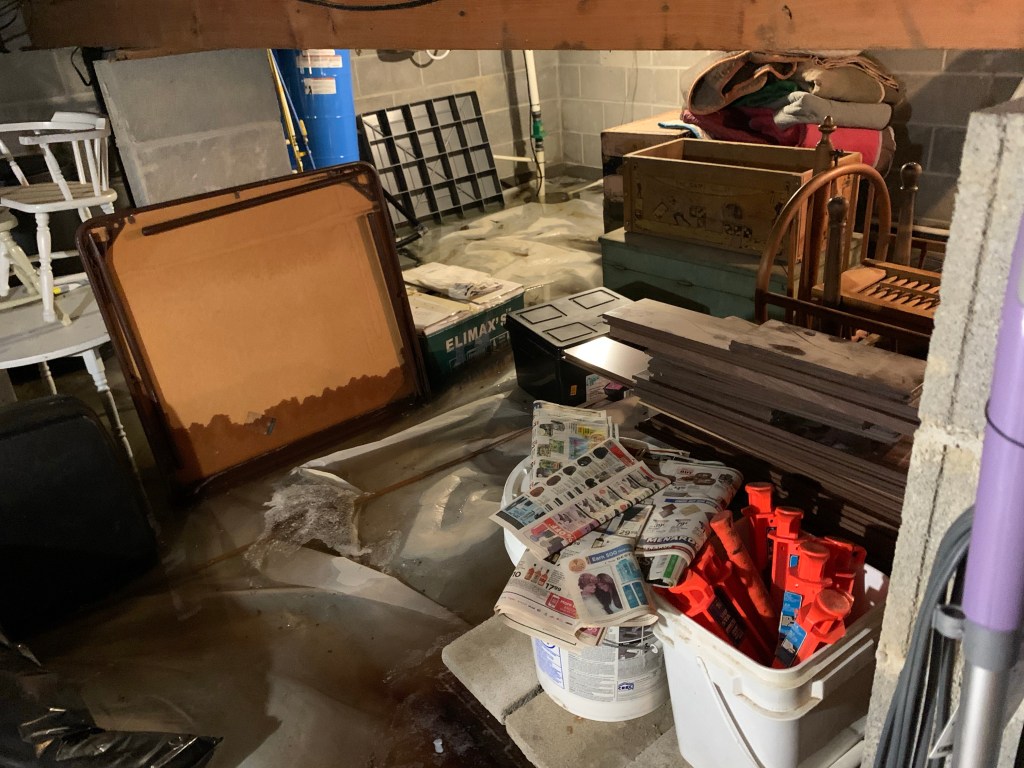
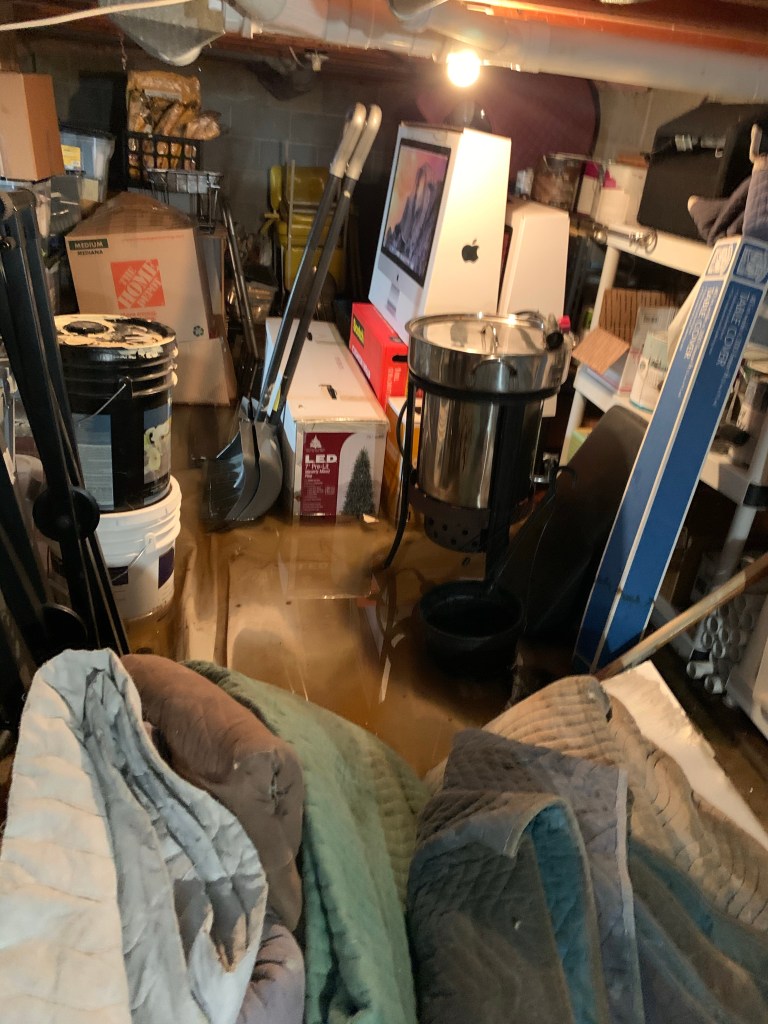
The next morning, after all the rain, Steve discovered quite a mess in the basement of the Gallery House, a building we renovated next door to use as an extra studio/gallery space. The sump pump had failed and there was now at least two inches of water throughout the basement. It was quite a chore to get a pump running in order to drain as much water as possible. Mopping up the mess that was left took care of most of the rest of the water.
After some reflection on needs vs dreams, I convinced myself that spending thousands on a printing press was just not going to happen and the money would be better spent cleaning out the mess at home.
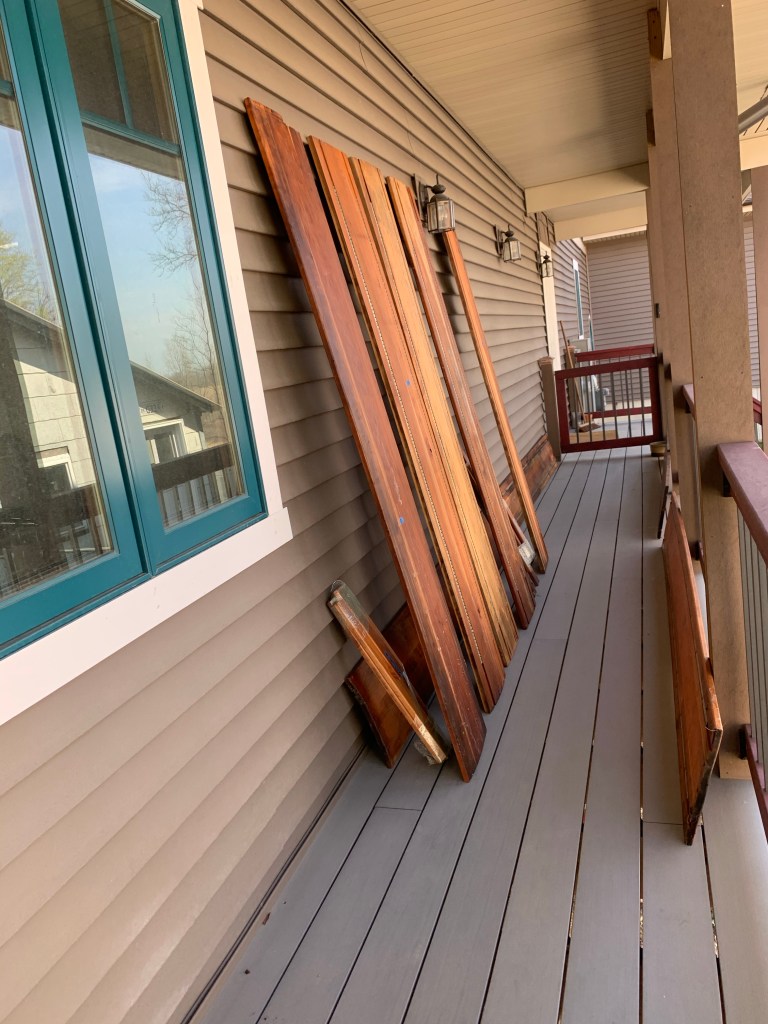
Then there was the chore of emptying as much of the soaking wet boxes that had not been set up off the floor. There was also the stack of uprights for the custom cherry library from Dad’s office in Florida that my late husband Keith had made. In a rush to get them out of the garage, they had been put directly in the plastic that covered the pea rock of the Michigan basement. That meant the first three or four pieces – 12-15” wide by as much as 10’ high – were soaked, warped and water stained. As I looked around the mess, not knowing if it would dry out before getting moldy, I began to think I was going to have to spend a lot of money to hire someone to unload the mess from the basement. We were finding it too painful for two old people with bad backs working in the 4’10” Michigan basement. After some reflection on needs vs dreams, I convinced myself that spending thousands on a printing press was just not going to happen and the money would be better spent cleaning out the mess at home.
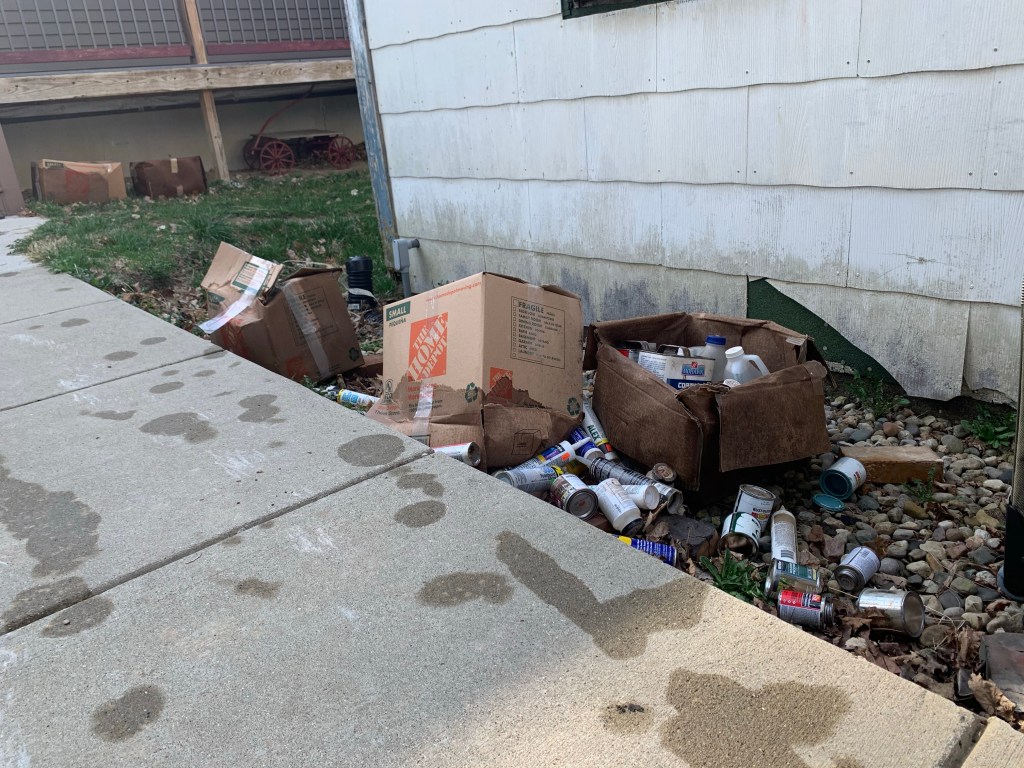
Dealing with the aftermath of a dead sump pump.
The following Sunday was the last day of the estate sale so I weakened and called to see what was left. The Vandercook was still there. But so was an 8×12 Chandler & Price platen press, almost identical to another one we had bought very cheap at an auction a couple years before. The one we had, however, was missing a gear and Steve was willing to make one. But here was a press we could strip for parts since we believed it was no good as a press, having become rusty from sitting under a leak in the basement under the front porch of the house.
Thinking we were going for parts, we headed down there with some tools to buy the press and take the gear with us, and perhaps buy a few other goodies that we might be able to use that were now selling cheap on the last day. Having failed at selling the Vandercook, the estate sale manager asked me if I was still interested and I explained that things had changed at home due to the basement flood and I could no longer afford my original offer. While we were disassembling the C&P, I overheard him talking to the family representative on the phone, telling her that “she wasn’t interested in the press anymore” which I took to believe that he had been depending on selling it to me to make up for the lack of a higher priced sale.
We headed home in the Tesla with a full carload of iron and various letterpress pieces parts and began making plans to come back later for the last pieces of the C&P.
As it turned out, Steve had forgotten to bring a Johnson pry bar to get apart the last pieces of the C&P. And the C&P itself turned out to be in much better condition than we’d thought, the rust turning out to be only superficial.
We were still there after 3 pm when the sale was supposed to end but weren’t able to get it apart. So I asked the estate sale manager if we could come back the following weekend to get it. “No problem. They’re not selling this place anytime soon.” And the Vandercook, along with everything that was still left, would be sold at auction using an app for the estate sales. So we headed home in the Tesla with a full carload of iron and various letterpress pieces parts and began making plans to come back later for the last pieces of the C&P.
A couple days later I got a text: “When you’re ready to pick up the rest of the press, text Janet” along with her number. I thought maybe Janet was his employee, but soon learned that she was the family member, and that she’d fired the estate sales guy. I called her the next day and also learned that he’d never told her we had already bought and paid for the C&P. She had started getting estimates for getting it removed (the platen alone weighed over 400 lbs.) by a guy who was going to torch it to cut it apart! In a room dripping with leaked oil and solvents!
Janet also told me that the Vandercook was still available and I could have it for a price that was far less than my original offer to the estate sales guy! Another Vandercook #4 had been in an online auction I was following that same week and my mind was blown as the price of that one soared to a final price of over $15,000.
Even so, I told her my concerns about having to pay a fortune for movers get it out of the basement. I knew, at over 1140 lbs, this was something far too big for the two of us to do on our own. We set a date to come back for the C&P and I said I’d let her know then. We went yet again, this time bringing the truck to pick up what was left of the C&P.
Our trip yielded many more items, and a new negotiation for the Vandercook, finally settling for a total price of under $1000 that included a bunch of other items big and small. Once again, we made plans for a return trip, this time with my favorite mover.
In the end, we brought home far more than I’d ever guessed. But the one thing was certain: Norman – the original owner of the press and builder of that home where it lived in its basement – wanted the press to go home with us. It cost me $1500 including a generous tip for the movers for the day. But they carried up the those basement stairs a lot more than that press, including the 400 lb. platen and frame for the C&P, a Hammond Glider Saw, another letterpress-specialty saw, a giant composing cabinet that had to be disassembled, several hundred pounds of metal “furniture” and leads, and miscellaneous stuff too numerous to remember.
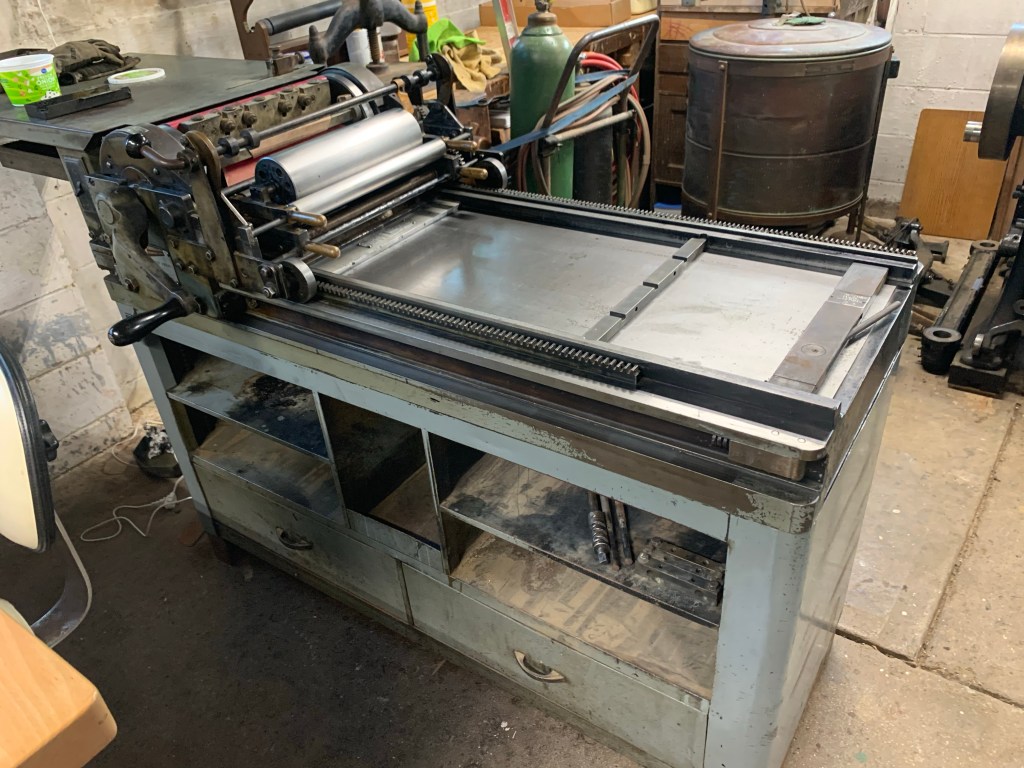
It needs rollers and a bit more cleaning and adjusting, but the Vandercook No. 4 is settling into its new home very nicely.
I reflect upon these events as I sort through the bags of pied type, the case of dusty mouse-ridden type from earlier acquisitions, and the newly rearranged shop around me, light streaming in as the presses stand like soldiers waiting for orders.
The original restored Kelsey 6×10 – purchased by Keith to print wedding invitations for our oldest daughter. This one started it all.
The 12×18 C&P that was given to us when buying the etching press.
The Potter proofing press I bought at auction.
The Poco proofing press Steve found on FaceBook Marketplace that someone was going to throw away… picked up at the end of the driveway.
The 5×7 Kelsey that Steve bought me from a local auction as a present.
The 8×12 Oldstyle C&P that we bought at a small town auction which also came with a second much larger 12×18 C&P that we’ve since decided sell for parts.
The Vandercook #0 that was buried among piles of other stuff the guy with the two C&Ps was trying to sell.
The 8×12 New style C&P we bought at the May sale for $50 just to get the gear we needed.
The Vandercook #4 that I’d walked away from, at least twice. And yet it still managed to find its way to our home.
These presses are my creative army preparing for the work ahead, telling stories, sharing typographic expressions, and maybe open up new voices, new thoughts expressed in printed form.
These presses are my creative army preparing for the work ahead, telling stories, sharing typographic expressions, and maybe open up new voices, new thoughts expressed in printed form.
I think that maybe we’re a bit of a pied bunch ourselves: me, Steve and the presses. A bit mixed up. We’re all a bit colorful in our own histories. Whatever it turns out to be, I understand now that all of these presses have found their way home to the pied piper of printing. And together we’ll see what colorful stories we’ll print in the future.
I was feeling nostalgic, and even a bit unsettled. In early 2012, just as I was preparing to go on a Fulbright scholarship trip to Russia, and was making the circuit of presentations for my doctoral work, Apple computer was making a serious update to their MobileMe platform. They were going to be shifting to iCloud and eliminating the iWeb software that had made it so easy to produce websites and blogs.
In the midsts of the swirl of activities in the late Winter/early Spring, I managed to have the presence of mind to archive five years of blog posts and podcasts to a corner of my computer for future attention. Unfortunately, events in life took a serious twist. In summary: I went to Russia, returned early due to my husband’s preliminary Stage IV cancer diagnosis, he died on 9/1/12 and I found myself redefined as a young(ish) widow at the age of 51, I finished my doctorate (10/2014), remarried in to my second husband (12/2014), welcomed a new grandson (12/2015), and built a new home (2015-present).
Needless to say, life has not stood still.
But for some reason, a trigger happened. I felt the need to reread these old posts, pull them over my head like a warm, cozy and familiar blanket. To close my eyes and step back a bit, remind myself where I was back then. The posts generally run from early 2006 to 2011 and cover the gamut, from art exhibitions and creative musings, to reflections on travel, being present, and just some funny thoughts. Overall, I enjoyed the time spent rereading and listening to these. They simultaneously gave me a sense of wunderlust and a firm grounding, a sense of being…where I am supposed to be.
I’m sickened by today’s events in Charlottesville. I’m sickened by the tableau of nazi and white supremacist history being writ large and live in this day and age. I am sickened that the ideologies of hate and bigotry are so freely, loudly, and angrily shouted on the streets of America where so many years before, and even so recently, we believed this diseased torrid flesh-eating curse had finally been permanently banished. Yet this hate led to someone dying and others seriously hurt.
Here’s another blogger’s response to the weekend’s events title My Fellow White Americans. And, sadly, I couldn’t agree more.
As I prepared to publish this, I came across a draft of an entry that I’d failed to publish shortly after the election. Yet as I re-read it now, I am deeply saddened that my fears have unfortunately been substantiated. Here it is, my previously unpublished post from last November.
Wrapping my head around a vote
written November 14, 2016
I just left a college-wide meeting where about 120 members of the campus community came together to talk about the election of Donald J. Trump and results of the most divisive election in modern history. Since that outcome of November 8th, I’ve been trying to wrap my head around the disconnect and compartmentalization that describes how many people I know and care about – including colleagues, neighbors, and others – could vote for a candidate who spent 16 months spewing ever more vile rhetoric of hate, homophobia, misogyny, racism, and xenophobia. Even more so, this same candidate chose not to demonstrate any scorn for those who perpetuated and even advanced this hate speech into action. Rather, he seemed to encourage it.
The kinder people I speak of are not racist. And I believe them. But then I’m left with a question of judgement. Did they hate Hillary so much more that they were willing to look past the comments of a person whose word-vomit and narcissism was decorated with the lacy fabric of… let’s just call it “crap”… the words are there and yet to repeat them gives them legs.
A consummate con, Trump is a showman whose singular goal is to get more views, more news coverage, more attention, regardless of how that happens. And somehow, nearly half the voters were able to swallow their own pride, set aside their own dearly-held values, and select a candidate whose con is only out-sized by his list of vile statements which emboldened a racist, homophobic, xenophobic, and misogynistic underbelly of America to come out of the woodwork. When is the last time a President was openly supported by the KKK or other white nationalist groups?
So I sat among colleagues who I hold great respect for, and even fondness, for we are, after all, a family of people committed to the common goal of changing the world through the success of our students. Yet, as I heard my well-intentioned co-workers from counseling offer ways of coping with anxiety – mostly intended for students in the room – I heard one of them, a kind-hearted white gentleman, finish his list of tips interspersed with the statement “because life will go on.” He had been doing so well… but then he went…there.
Life will go on? I guess. But in that one statement, he succeeded in diminishing the very real fears of many of the people in the room. Another colleague who I have often tapped to talk about cross-cultural dialogue and understanding took note of this statement. As a well-educated African American man, he knew the counseling and psychology phraseology. But he also knew what his own fears felt like. And he feared that life was not going to “go on” the same way for a long time. His pain was palpable and I felt a lump in my throat.
Sitting nearby was another colleague who I know to be gay, but he did not speak up. From his body language in response to an LGBT student’s expression of fear and concern countered with a defiant statement of hope, I could feel his pain, as well.
But then another colleague, an African American woman asked a variation of what I had already expressed via the microphone being passed around. How do I wrap my head around the fact that there are people I know who voted for this man in spite of the banner of hate that he waived? How do I resolve this conflict with people who accepted his hate, but then want to work with me? An unfulfilling answer came from a white male in the room who acknowledged his privilege but missed the point. He said we needed to just move past this and go on.
There it was again. Just move on.
Yep. Accept the fact that someone who has emboldened his most extreme followers to openly spew anti-Semitic, anti-Muslim, anti-women, anti-gay, anti-Hispanic, anti-Black crude, cruel, hate speech of the most deplorable kind, should be welcomed with open arms into the leadership of not only this country, but the free world? Accept that? Nope. Not at all.
I know that my male white colleague, and many people who voted for “the Don,” didn’t mean to vote for the vile crap that came along with his nonsensical campaign “speeches” and hyperbolic “big” promises. They may have been focused on only a few issues, one of them likely a palpable dislike for Hillary. I get it. She wasn’t my first choice, either. But she is highly experienced and well qualified for the job, regardless of the “email scandal” non-scandal that swirled around her campaign. I know that the people I call my friends, neighbors, and others I care about are caring people, too. And believe me, I hope above hope that I am wrong, that all the terrible things that the Don has unleashed will fizzle without doing permanent damage.
In the meantime, I don’t think “moving on” is quite the right term for what I – and many others – will be doing. Instead, we too, will become more emboldened to reach out to each other for support, for healing, to promote and hang tight to the values we hold dear, for love, kindness, acceptance, tolerance, celebration of differences, and…a brighter future. We will stand up to bullying, stand by our friends, step forward towards a more inclusive community.
Perhaps…maybe someday… we’ll even “move on.” Maybe after we have somehow managed to overcome this Pandora’s box of evil hate that I think we can all (mostly) agree is antithetical to the values of this nation, and close that horrid loathsome box shut again.
Charlottesville, Virginia 8/12/17
8/12/17 – Unfortunately, far from “moving on,” it seems that the only way to fight evil is to face it head on, relentlessly, and without deviation. The opposite of evil is love. But today, evil is my enemy, and love for my fellow compassionate humans is my weapon of choice. – mjf
In the blog entry “My Mother Wasn’t Trash,” writer Joshua Wilkey shares his mother’s important and sensitive story about her life in poverty in Appalachia. It’s worth a read.
When people are eaten up mentally and physically by a lifetime of compounded shitty choices, they reach a point where they can’t even decide what is best anymore, because they realize that no matter what they do – no matter how hard they try – they are cogs in a broken machine and nobody cares about them anyway. Poor Appalachian people are broken, but not nearly as broken as the systems that keep them poor.
Thank you, Joshua Wilkey, for bringing a voice forward to be heard.
This is an icon I created when working in Fiji. It was one of 24 icon-style illustrations with Pacific themes. Being my favorite, I adopted this one as a psuedo-logo.











 Mara Jevera Fulmer's Blog