And the storms of grief & memory
There is magic here. It must all be magic.
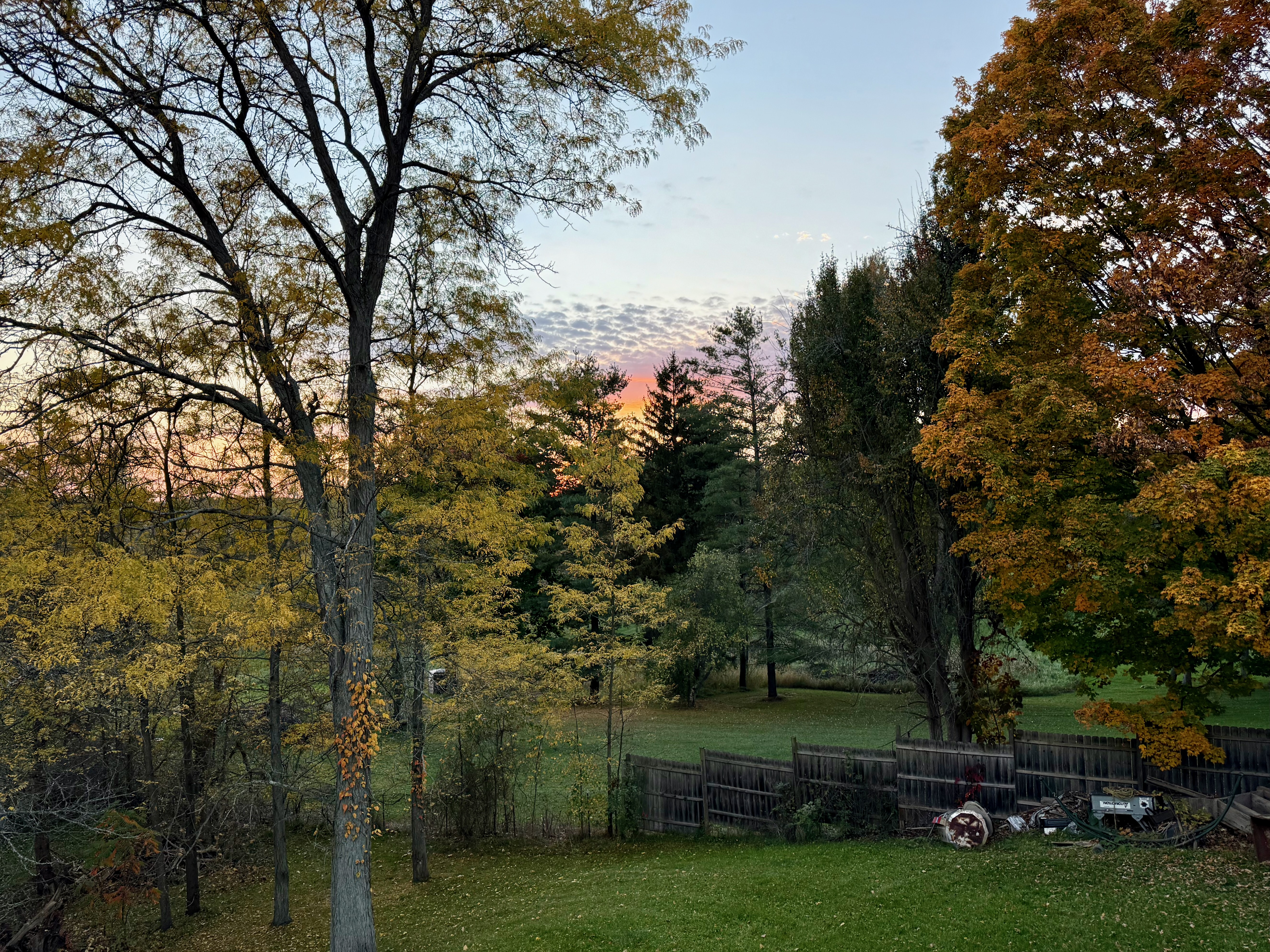
Because it is clearly a magical creation that I am witness to! One that is far beyond my humble understanding. How else could I have found myself standing here wrapped in such beauty as a fall sunset? The darkening blues above, the fiery pinks, yellows, purples, a flaming orange on the horizon. Lights and darks bouncing around the small pillow clouds scattered across the sky.
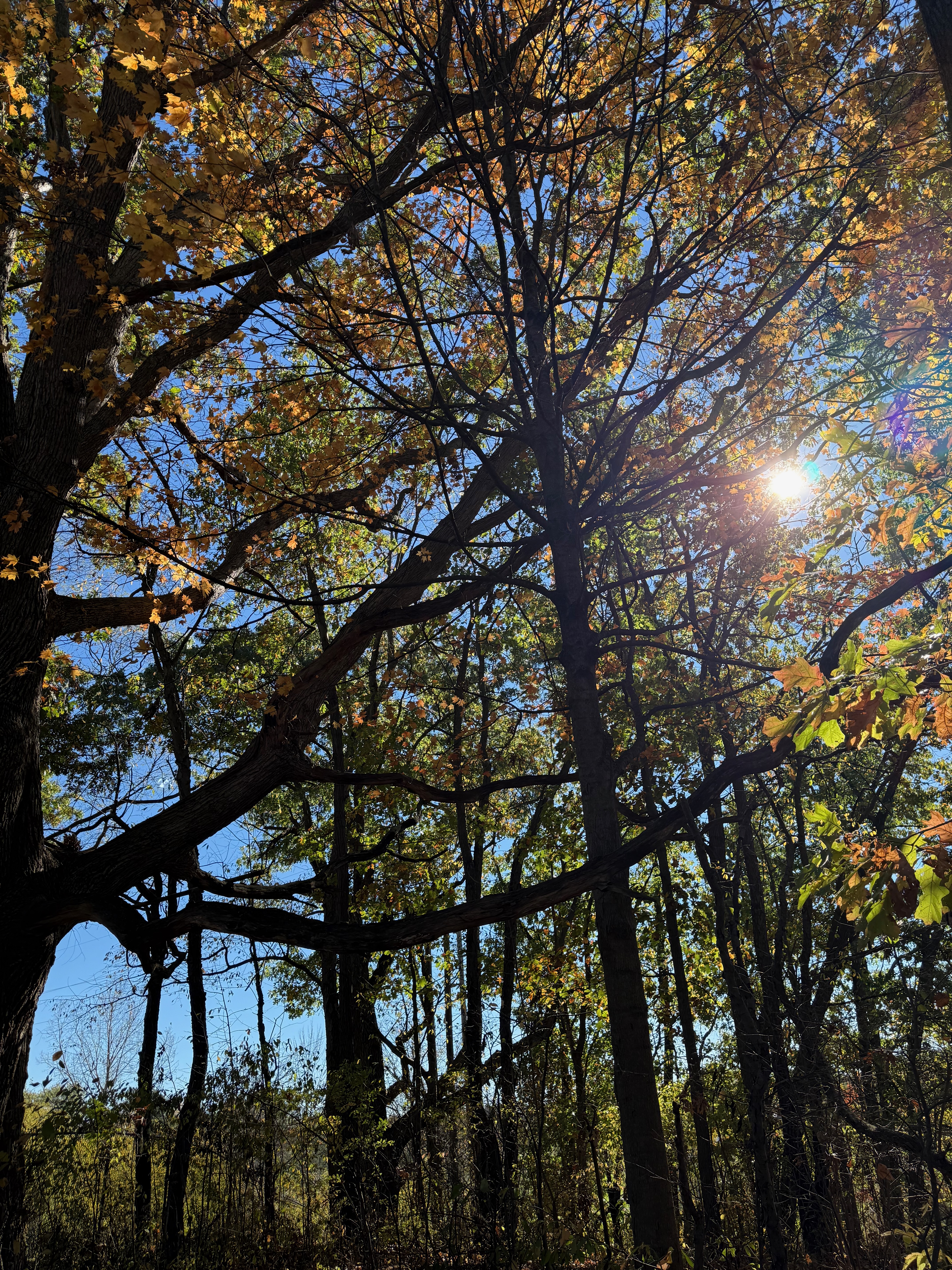
As I walk through the nearby woods on a late Fall afternoon, the energy is palpable. With each step, sunlight streams its energy down to me, gleaming slivers of light weaving their way through the branches and leaves to the forest floor at my feet. Reds, golds, and honey green leaves glow with a radiance that portends a power far beyond my keeping. I soak in its restorative gifts. I need this. Even as I am weighted by a jagged pain from loves lost. I know that the healing magic takes time to work, and what will follow is strength from the scars that fill in the cracks.
The House on the Hill
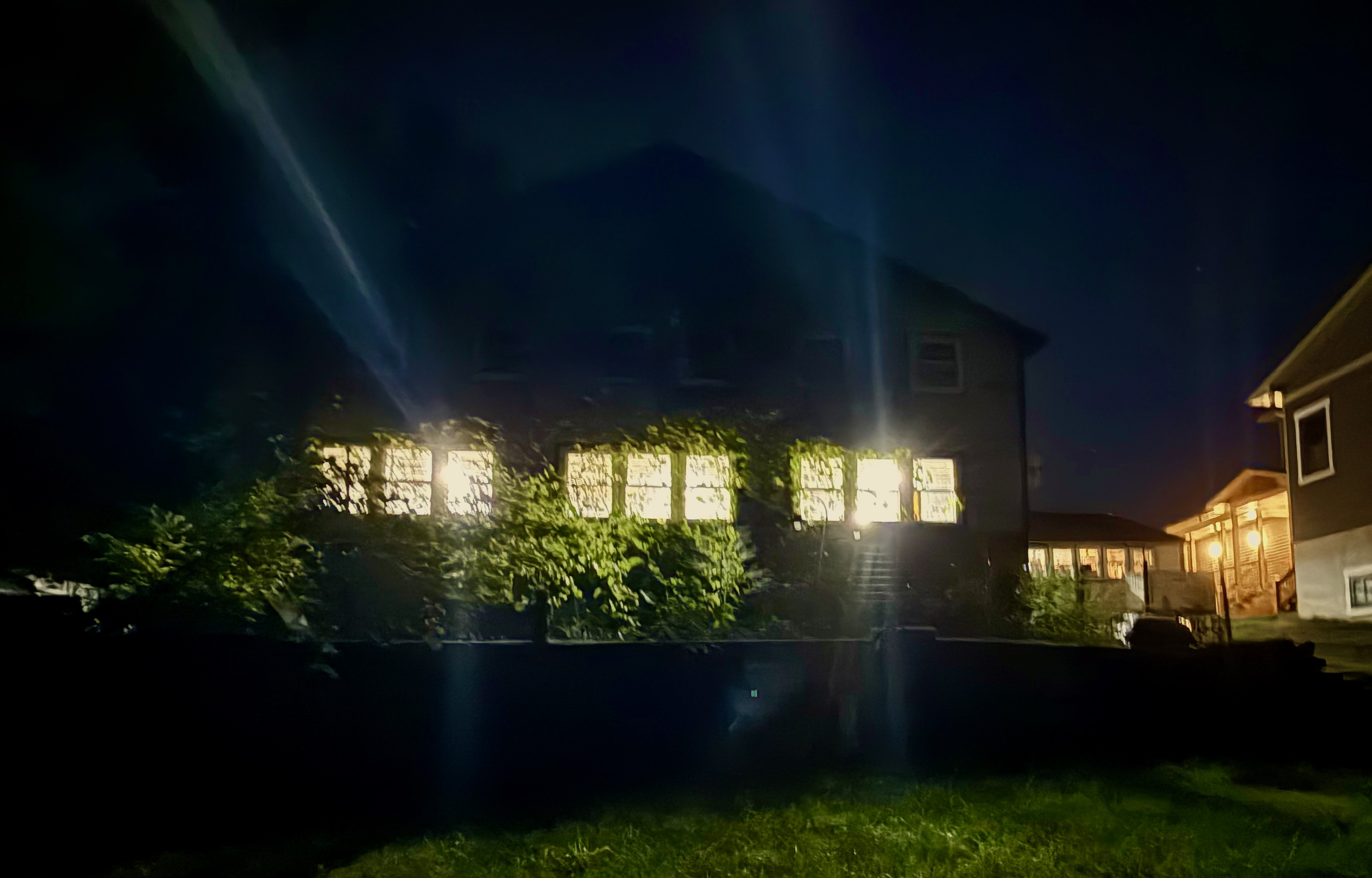
And as I look back at the large structure on the hillside, I remember a vision from another lifetime. I was sitting on that very same hillside as Keith wandered behind me… so many years before. Chattering away about how we’d use this space, he thought maybe we’d even make a home here. I remember suggesting that perhaps we could have the house jut out from this hillside, making it feel like it was reaching for the trees. I also remember that he wasn’t very convinced at the time, so focused he was on his own vision of a future creative workspace. So I set my vision aside.
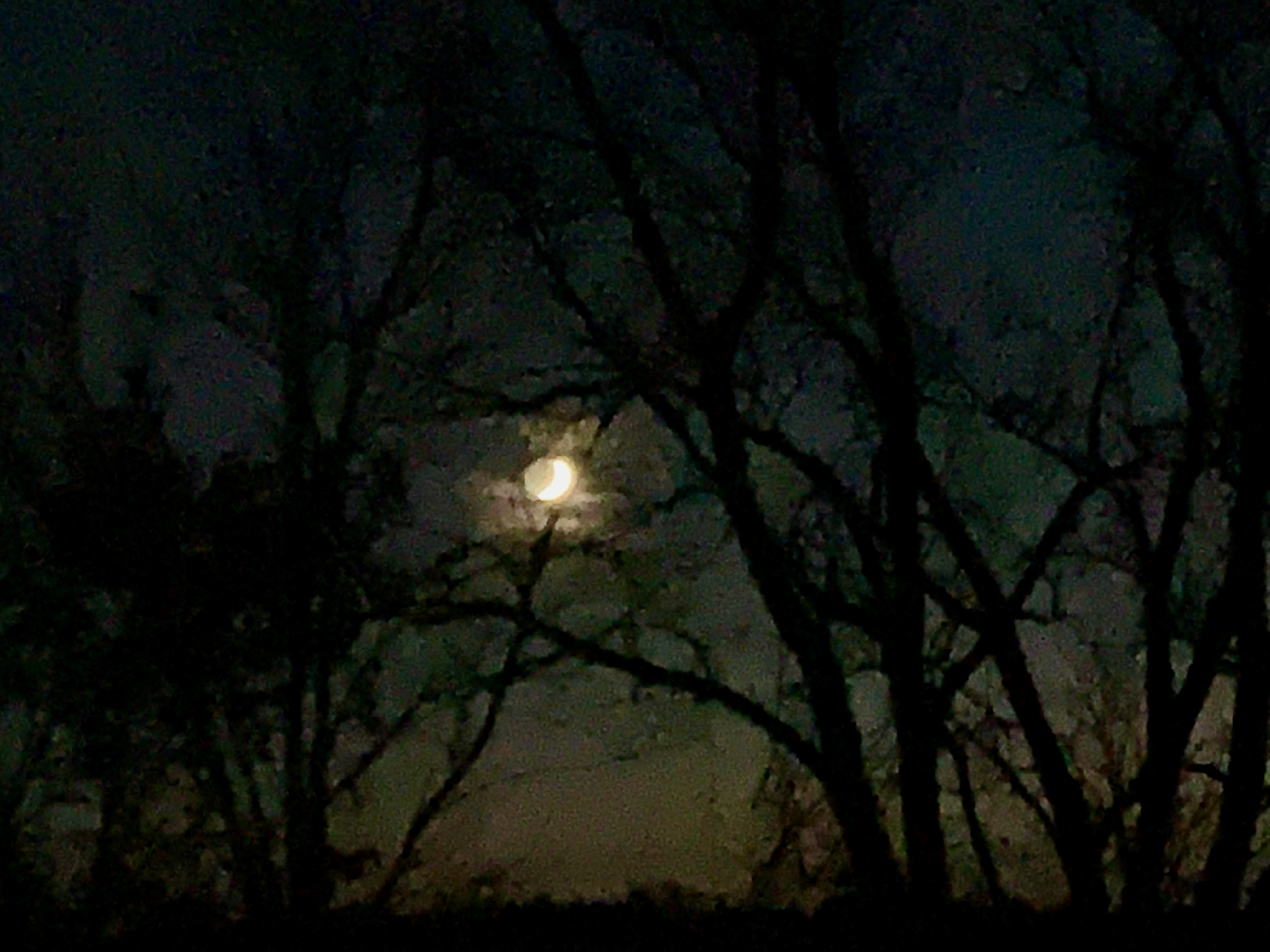
Though he was gone before we could see it all come together, I still see him in my dreams. I see him in my memories, hiking up this very same hill, his back to me as I pause to etch his form in my mind. And I see him in the beams of light that fall across my face on the advent of a cloudless night and a shining moon.
This home would be manifested long after he was gone, after he’d made me promise never to divest myself of this place. And starting from that initial vision on this hillside until now, it has been a long-fought exercise in love and tenacity. Hard-won after so many tears, worthy of a hero’s journey fighting against evil forces born of grift and deceit. And so much loss. But beauty and magic would eventually win.
With Steve, I’d often ask him about this vision I’d had of a treehouse view. It felt even more important to me than the physical home it would be attached to. I needed to feel part of nature, even if I couldn’t always stand within it. Ever supportive he, too, believed in the possibilities, allowing me to believe in them even more.
So here I am now, on this perch built of love and pain, beauty and scars, standing here spellbound in my participation in a ritual of a Fall evening’s close. I could hardly suppress these overwhelming feelings of awe, for this place, for this moment, so powerful does it feel.
I let my eyes close softly in quiet prayer. A light breeze, like a soft kiss caressing my cheek from a loved one I can no longer see with my eyes open. Yet after the sun has fully set, starlight flickers above, and from fireflies floating through the darkness below.
My Portal Window
Back inside after my long walk in the woods, the afternoon finds me sipping cold coffee at my kitchen island. I am warmed by the sight of stardust floating along the sunlight that streams from the dormer window high above me. It is my portal view to the skies above when I’m inside. And often late at night, I stop below this window to witness the moon shining through, like a cosmic cloak to warm my heart. “Hello,” I say to the spirits that ride along that starlit highway. “I miss you.” But I remember that they’re never really very far away.
So…was it a visitation? Or only a dream when I found myself laying upon the fallen leaves, sketchpad and pencil in my hands, drawing the greyscale planes of a large rock? Keith leans down beside me so close that his cheek touches mine.
I am reminded often that my spirit partners have never really left me. Yet I still long for the more physical touch that would long remain warm on my skin. So…was it a visitation? Or only a dream when I found myself laying upon the fallen leaves, sketchpad and pencil in my hands, drawing the greyscale planes of a large rock? Keith leans down beside me so close that his cheek touches mine. His mustache soft upon my face as he kisses me on the lips. And when I awake to the morning light, a calmness overtakes me, and a golden glow from the rising sun still clings to the leaves of the large red maple outside my bedroom window.
These visitations, whether from Keith – or from Steve, are my sustenance. I still hear my spiritual partners, their voices whispering in my ear. I hear them in the birdsong and squirrel chatter throughout the day, in the soft chorus of peepers that begin to fill the evening air with their song, or the late night doleful wails of the coyotes’ distant howls.
But while I am standing here, seemingly alone, no one standing beside me here, I bear witness to this magical, mystical place. Others may think me mad. But sanity is a shifting state of being. Yet I see these harmonies so pure, so powerful, so delicate that it must be the work of a magical artist of the most talented sort. To be wrapped in its ageless wisdom, to be allowed to participate, to steward this mystical place… it is a privilege I hold sacred.
As the sun sets below the horizon, and the air turns cool, I am reminded that there is really no such thing as being alone. Because even if loneliness creeps into the edge of my view, as long as I embrace these most beautiful of creations, even the light shows of a violent thunderstorm, these spirits hold me close and whisper in my ear – “you are not alone, we are always near.”
And after the storms of grief pass, and the sun rises anew, I make my way across the lush green spaces, old trees reaching their still golden-leafed branches, creating arches across the sky, my church of the most natural kind. My muses join me as I head to the old post-and-beam studio with windows on three sides to allow the magic to permeate my view. I prepare for my utterly inadequate creative contributions to this otherwise beautiful, imperfectly perfect space to create anew.